Sent vs Twilio: Advantages of a modern messaging API
Send SMS, WhatsApp, and RCS through one API. Sent brings channel-aware contacts, reusable templates, and automatic routing into the same messaging workflow, so your team can focus on what the message needs to do.
Compare the workflow behind every message
Both platforms support multichannel messaging. The useful comparison is how each handles the decisions and setup around a send.
| What matters |  | |
|---|---|---|
| Messaging API | One send interface for SMS, WhatsApp, and RCS. | Programmable Messaging supports SMS, MMS, RCS, and WhatsApp. |
| Route selection | Automatic selection uses recipient availability and account routing rules. | Messaging Services manage sender selection; channel behavior depends on the product and configuration. |
| Cross-channel fallback | Eligible automatic routes can try another channel; pinned sends do not cross-fallback. | RCS supports SMS/MMS fallback; Bulk Messaging supports configurable channel fallback. |
| Message templates | Reusable definitions with channel-specific rendering and approval states. | Content API and Template Builder manage cross-channel templates. |
| Recipient context | Channel availability and routing state live on the contact. | Messaging Services can retain sender-to-recipient mappings through Sticky Sender. |
| Sender registration | Channel setup includes sender and approval requirements. | A2P 10DLC registration is supported through Twilio’s registration workflow. |
| Delivery visibility | Dashboard, API, and webhook status tracking. | Message status callbacks and message records. |
Showing 5 of 7
Compare Sent to Twilio
Capabilities, operations, and commercial terms in one place.
Both Sent and Twilio support SMS, RCS, WhatsApp, and Voice. Sent uses one endpoint to choose the best channel and format the message automatically.
| Capability | | |
|---|---|---|
| SMSSend texts to mobile numbers. | Available | Available |
| WhatsAppMessage customers on WhatsApp. | Available | Available |
| RCSSend branded, interactive messages. | Available | Available |
| VoiceMake and receive calls. | Available | Available |
| Cost component | | |
|---|---|---|
| Billing modelWhat you pay for. | Per-contact | Per-message |
| Cost per messageObserved average or published base rate. | $0.0053 | $0.0116 |
| Contact feeRecurring platform charges. | $0.015 | No contact fee |
| Other charges / restrictionsOther costs and restrictions. |
|
|
| Volume pricingRates at higher volumes. | Custom terms through Sales. | Volume / committed-use discounts: contact sales. |
Sent uses eligible automatic fallback; Twilio: Automatic RCS-to-SMS/MMS fallback through a Messaging Service.
| Capability | | |
|---|---|---|
| Media / MMSSend images, audio and files. | Available | Available |
| Channel selectionWhether the platform chooses the best available messaging channel automatically or requires you to select and configure the channel yourself. | Automatic | Manual |
| Delivery receiptsTrack delivery and read status. | Available | Available |
| TemplatesManage reusable message content. | Available | Available |
| Programmatic automated opt-out handlingRecognize opt-out intent and block future sends automatically. | Available | Partial |
| Programmatic multi-channel broadcastCreate messages across more than one delivery channel from one API. | Available | Partial |
| Two-way messagingReceive replies and inbound messages. | Available | Available |
Compare customer separation, number operations, sender provisioning, and compliance workflows.
| Capability | | |
|---|---|---|
| Programmatic multi-tenancyLLM ease of use score | Sender profiles9/10 (Open the scoring prompt in ChatGPT) | Subaccounts API7/10 (Open the scoring prompt in ChatGPT) |
| Campaign creationRegister US business messaging. | Available | Available |
| Programmatic number provisioningProvision numbers through code. | Available | Available |
| Programmatic customer onboardingCreate customer accounts through code. | Available | Available |
| Programmatic compliance requirementsRetrieve required compliance information. | Available | Partial |
| Toll-freeSend SMS and MMS from toll-free numbers. | Available | Available |
| Short codesSend from high-throughput short-code numbers. | Available | Available |
| Alphanumeric senderUse a branded sender name where supported internationally. | Available | Available |
| SIP trunkingConnect voice traffic using SIP trunks. | Not available | Available |
| 10DLC approval timeAverage over the trailing 30-day period; not a guaranteed SLA. | 0.4 days | Not published |
Scores are an illustrative AI assessment from the linked prompt, not an independent benchmark.
Compare testing, retries, capacity, webhook controls, and message diagnostics.
| Capability | | |
|---|---|---|
| Webhook signaturesAuthenticate incoming webhooks. | Available | Available |
| Programmatic template lifecycleManage templates through code. | Available | Available |
| Programmatic automated testingTest without production side effects. | Available | Partial |
| Programmatic message diagnosticsRetrieve delivery logs and errors. | Available | Available |
| Programmatic number lookupValidate a destination and inspect its messaging capabilities before sending. | Available | Available |
| Programmatic bulk recipient sendsSubmit one message request for multiple recipients. | Available | Partial |
Compare the cost of your conversations
Look at active contacts, message frequency and delivery costs together.
Sent
$0.015 per active contact
One active contact costs $0.015 for 28 days, plus message delivery at cost. Repeat messages do not add another platform fee.
Aligned incentives: Sent doesn't charge a markup on messages, which means that we are motivated to pass through the lowest possible carrier fees to you.
Twilio
Usage per SMS segment
Each message carries two costs: Twilio’s per-message markup and the applicable carrier fees (e.g. AT&T). You pay both on every message.
At the observed US SMS rates below, Sent costs less at 3 or more messages per contact in a 28-day window. For a single SMS, Twilio costs less. This projects the recorded sample, not a volume quote.
| Contacts / messages | | Difference | |
|---|---|---|---|
| 100K contacts300,000 messages | $3,090Observed billing projection | $3,480Observed billing projection | −$390 |
| 500K contacts1,500,000 messages | $15,450Observed billing projection | $17,400Observed billing projection | −$1,950 |
| 1M contacts3,000,000 messages | $30,900Observed billing projection | $34,800Observed billing projection | −$3,900 |
3 messages per contact
Sent assumes a $0.015 contact fee per 28 days plus $0.0053 per outbound message, based on 380 billed messages. Twilio uses an observed USD 0.0116 average from 5 billed messages. These are rounded, unmatched samples, not universal rates or volume quotes. Excludes number rental, registration, negotiated discounts and managed verification services. US outbound SMS · USD · one 28-day contact window · one segment per message.
Pricing sources and methodology, checked October 14, 2026: Sent official pricingSent observed billing (380 messages)US delivery rate sheetTwilio official pricingTwilio observed billing (5 messages)
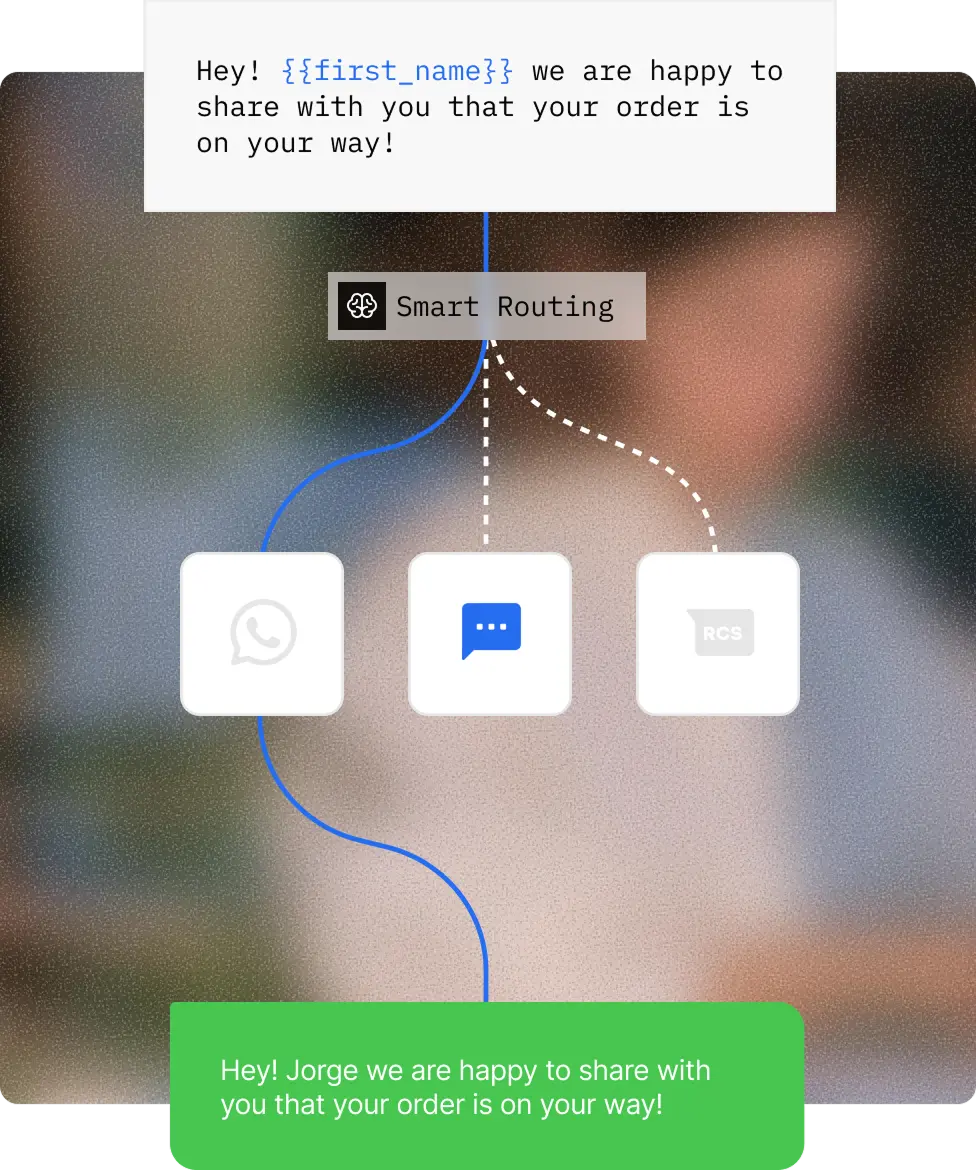
Let the message find its channel
Routes messages to the best available channel, transforms templates for that channel, and respects configured quiet hours. Leave the channel unpinned to use automatic routing.
Twilio: You configure channels and senders. Messaging Services can automatically fall back from RCS to SMS/MMS.
Build customer messaging into your product
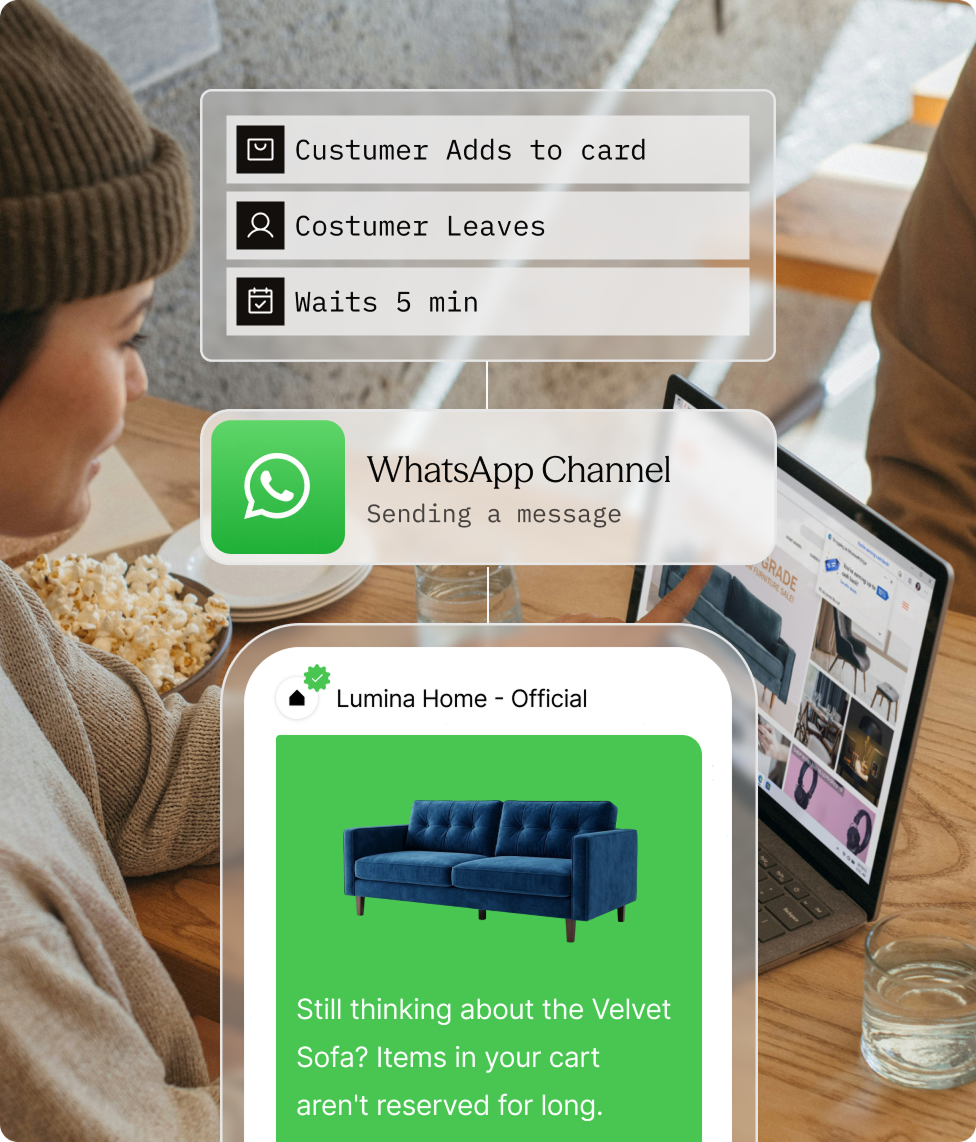
Create a Sender Profile within your organization; send for that customer by passing its profile ID.
Twilio: Create a subaccount and configure its messaging resources; send through that customer’s account SID.
Before you switch
No. Sent charges its platform fee once per active contact, so the saving grows with how often you message the same people. The sample above sends three messages to each contact in a billing period. If most of your contacts hear from you only once, pricing per message can cost less. The estimator on the pricing page works it out for your own mix.
On Sent, each customer you send for is a Sender Profile inside your own organization, and you send on their behalf by passing that profile’s ID. On Twilio, each customer is a subaccount with its own messaging resources, and you send through that customer’s account SID.
Yes. Sender registration, such as A2P 10DLC in the US, WhatsApp business verification and template approvals, is decided by the carriers and by Meta, whichever platform you send through. We run the submissions with you and tell you where each one stands, but the review itself belongs to them.
Start with one flow, such as order updates or verification codes. Route a share of that traffic through Sent, compare delivery against Twilio on the same messages, and move the rest once the numbers agree. Your current setup keeps running the whole time.